


Core Facilities
Core facilities at the Institute of Technology are providing access to sophisticated technologies. Their role is to develop and maintain the knowhow, take care and upgrade the machinery and provide services for scientists and also for wider research community.
In Institute of Technology, there are five core facilities:
Core Facility for Cell Technology
The mission of Core Facility for Cell Technology is to provide high-level technological support for research community, both in academia and industry.
We have the instruments and technical know-how to provide the following services:
There is a fee for our services, please contact the laboratory manager.
First time users must contact Eve Toomsoo ([email protected]) first, training is mandatory before using the machines.
Already know what to do? Please book a time. Booking is currently managed through Microsoft Outlook calendar, accessible to all employees of University of Tartu and PhD students. People outside of university should contact Eve Toomsoo ([email protected]) to secure their access.
Our facility provides mass spectrometry-based analysis of proteomes, proteins, and peptides.
Services:
· Proteome composition analysis: Identifying changes and variations in biological samples using both label-free and labelled approaches (such as SILAC).
· Protein identification and sequencing: Verification of protein identity and sequencing in purified protein preparations, electrophoresis gel bands, and other sources.
· Identification of protein interaction partners: Analysing samples prepared via co-immunoprecipitation, TurboID, and other specialized methodologies.
· Mapping of post-translational modifications: Determination and mapping of modifications such as phosphorylation, ubiquitination, methylation, etc.
· Species origin analysis: Determining the species of origin based on identified proteins (e.g., paleoproteomics and similar fields).
We offer our services to research laboratories at the University of Tartu, elsewhere in Estonia, and abroad, as well as to the private sector.
Ivar Ilves, PhD (Molecular Virology),
Head of the Proteomics Core Facility
Associate Professor in Biomedicine e-post: [email protected]
Merilin Saarma, MSc (Biology),
Laboratory specialist e-post: [email protected]
We suggest reaching out to us during the analysis planning phase to discuss the most appropriate sample preparation and analytical techniques.
Our address:
Proteomics Core Facility,
room #532 Institute of Technology,
University of Tartu,
Nooruse 1,
Tartu 50411,
Estonia
We conduct our analyses using the Q Exactive HF and Q Exactive Plus quadrupole-Orbitrap hybrid mass spectrometers from Thermo Fisher Scientific. Combined with our Dionex Ultimate 3000 RSLC nano-LC liquid chromatographs, these systems create a powerful and modern technical platform for performing qualitative and quantitative proteomics analyses based on liquid chromatography-assisted tandem mass spectrometry (LC-MS/MS).
Along with your samples, please email us a completed order form, the PDF template of which can be downloaded HERE >>
Please download the form to your computer, fill it out in Adobe Acrobat Reader, and save it by adding the date and your name to the filename. For up to ten samples, you can include the sample list at the end of the order form. For more than ten samples, please send the list as a separate Microsoft Excel spreadsheet.
You may deliver the samples in person or mail them to us. For in-person delivery, please contact us in advance to arrange a suitable time. For postal delivery, please use a courier service rather than standard mail.
Cells, tissues, body fluids, protein solutions, and other biological materials should be flash-frozen (e.g., in liquid nitrogen) before shipping. They must be transported frozen, preferably on dry ice (-80°C) or at least at -20°C. Tissue culture cells are best sent as washed, dry cell pellets (centrifuged). Protein bands cut from electrophoresis gels, precipitated or lyophilized proteins, or samples in denaturing buffers should ideally be transported at -20°C (with cold packs), on ice, or with cooling packs. However, these sample types can also withstand room temperature for short periods during transport.
For protein identification from gels, we recommend using Coomassie Brilliant Blue staining. If using a silver staining protocol, please confirm that it is compatible with mass spectrometry. During gel electrophoresis and other sample preparation steps, it is crucial to minimize environmental protein contamination. The primary sources for this are keratins from skin, dust, and bovine serum proteins in cell culture media. To reduce the contamination when preparing samples, please adhere to the following guidelines: always wear fresh gloves, use the freshest, highest-quality reagents available, and ensure all tools and equipment used (containers, electrophoresis plates, combs, etc.) are properly washed and clean.
Note that we do not accept samples containing radioactive proteins or compounds for analysis.
Paternoga H, Xia L, Dimitrova-Paternoga L, Li S, Yan LL, Oestereich M, Kasvandik S, Nanjaraj Urs AN, Beckert B, Tenson T, Zaher H, Inada T, Wilson DN. Structure of a Gcn2 dimer in complex with the large 60S ribosomal subunit. Proc Natl Acad Sci U S A. 2025 Apr 15;122(15):e2415807122. doi: 10.1073/pnas.2415807122.
Koit S, Tamberg N, Reinapae A, Peil L, Kristjuhan A, Ilves I. A conserved phosphorylation mechanism for regulating the interaction between the CMG replicative helicase and its forked DNA substrate. J Biol Chem. 2025 Mar 14;301(4):108408. doi: 10.1016/j.jbc.2025.108408.
Dimitrova-Paternoga L, Kasvandik S, Beckert B, Granneman S, Tenson T, Wilson DN, Paternoga H. Structural basis of ribosomal 30S subunit degradation by RNase R. Nature. 2024 Feb;626(8001):1133-1140. doi: 10.1038/s41586-024-07027-6.
Peil K, Värv S, Ilves I, Kristjuhan K, Jürgens H, Kristjuhan A. Transcriptional regulator Taf14 binds DNA and is required for the function of transcription factor TFIID in the absence of histone H2A.Z. J Biol Chem. 2022 Sep;298(9):102369. doi: 10.1016/j.jbc.2022.102369.
Xia J, Sánchez BJ, Chen Y, Campbell K, Kasvandik S, Nielsen J. Proteome allocations change linearly with the specific growth rate of Saccharomyces cerevisiae under glucose limitation. Nat Commun. 2022 May 20;13(1):2819. doi: 10.1038/s41467-022-30513-2.
Pochopien AA, Beckert B, Kasvandik S, Berninghausen O, Beckmann R, Tenson T, Wilson DN. Structure of Gcn1 bound to stalled and colliding 80S ribosomes. Proc Natl Acad Sci U S A. 2021 Apr 6;118(14):e2022756118. doi: 10.1073/pnas.2022756118.
Crowe-McAuliffe C, Takada H, Murina V, Polte C, Kasvandik S, Tenson T, Ignatova Z, Atkinson GC, Wilson DN, Hauryliuk V. Structural Basis for Bacterial Ribosome-Associated Quality Control by RqcH and RqcP. Mol Cell. 2021 Jan 7;81(1):115-126.e7. doi: 10.1016/j.molcel.2020.11.002.
Campbell K, Westholm J, Kasvandik S, Di Bartolomeo F, Mormino M, Nielsen J. Building blocks are synthesized on demand during the yeast cell cycle. Proc Natl Acad Sci U S A. 2020 Apr 7;117(14):7575-7583. doi: 10.1073/pnas.1919535117
Tamberg N, Tahk S, Koit S, Kristjuhan K, Kasvandik S, Kristjuhan A, Ilves I. Keap1-MCM3 interaction is a potential coordinator of molecular machineries of antioxidant response and genomic DNA replication in metazoa. Sci Rep. 2018 Aug 14;8(1):12136. doi: 10.1038/s41598-018-30562-y.
Huter, P.; Arenz, S.; Bock, L. V.; Graf, M.; Frister, J. O.; Heuer, A.; Peil, L.; Starosta, A. L.; Wohlgemuth, I.; Peske, F., Structural basis for polyproline-mediated ribosome stalling and rescue by the translation elongation factor EF-P. Molecular Cell 2017, 68, (3), 515-527. e6.
Peil, L.; Starosta, A. L.; Lassak, J.; Atkinson, G. C.; Virumäe, K.; Spitzer, M.; Tenson, T.; Jung, K.; Remme, J.; Wilson, D. N., Distinct XPPX sequence motifs induce ribosome stalling, which is rescued by the translation elongation factor EF-P. Proceedings of the National Academy of Sciences 2013, 110, (38), 15265-15270.
Peil, L.; Starosta, A. L.; Virumäe, K.; Atkinson, G. C.; Tenson, T.; Remme, J.; Wilson, D. N., Lys34 of translation elongation factor EF-P is hydroxylated by YfcM. Nature Chemical Biology 2012, 8, (8), 695-697.
Scientific Equipment Core Facility builds unique apparatus, that is not found in stores. Our clients are scientists, who need scientific equipment for scientific work, but also companies with the need for novel equipment engineering and constructing.
There is a fee for our services, please contact the laboratory manager.
Contact:
E-post:[email protected]
The mission of Core Facility for Biosafety is to improve national biosafety, biosecurity and provide high-level technological support for research community, both in academia and industry. We have equipment and technical competence to provide the following services:
1. Using laboratory equipment
2. Research and/or servicework (hazard class 3)
3. Making and growing tissueculture cell lines from mammal tissues
4. Infection in tissueculture model, where eucaryotic tissueculture cells are transfected with viral RNA or cDNA or are infected with natural and/or recombinant viruses
5. Infection in animal model where mice or rats are infected with natural or recombinant viruses
6. Infection in tissue culture model where eucaryotic tissue culture cells are infected with pathogenic microbes (hazard class 2)
7. Infection in animal model where mice and rats are infected with pathogenic microbes with purpose to investigate effect of treatment in infection model and/or to investigate pathogenetic process caused by virus/microbe
8. Work in general laboratory with non-infectious material
9. Other services
Please register before using our laboratory equipment or services
There is a fee for our services, please contact the laboratory manager.
Here is a list of our laboratory equipment.
Before planning experiment, please contact Liane Viru ([email protected], phone nr +372 53436585) in order to create test plan for effective analysis.
Core Facility for Biosafety is located in 1st floor of Institute of Biomedicine and Transaltional medicine, Ravila 14B.
The core facility of simulation technologies operates at the materials in extreme environmental conditions working group, and its main goal is to find a commercial application for computer simulation methods used and developed at the institute of technology. Examples of applied methodology are finite element analysis, fluid dynamics, molecular dynamics, density functional theory (DFT). We also use combinations of methods in a multiscale framework. The most important software used are Comsol Multiphysics, OpenFOAM, LAMMPS, Gaussian, VASP, FEMOCS.
The main focus of the core laboratory of simulation technologies is the provision of finite element method and fluid dynamics simulations to Estonian companies, as well as to the international market. In the international competitive situation, molecular dynamics and DFT are added. The core laboratory focuses primarily on solving nonlinear and multiphysics problems in situations that require adaptation of methodologies and are generally not cost-effectively available to companies when implementing standard software (Ansys, Solidworks Simulation, etc.). In this way, we acquire a market niche and ensure the effective use of highly qualified laboratory.
There is a fee for our services, please contact the laboratory manager.
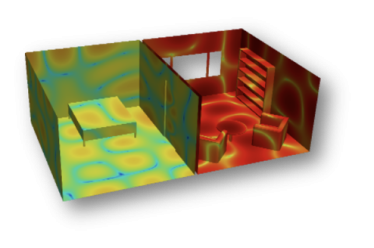
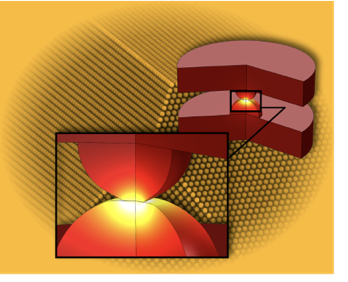
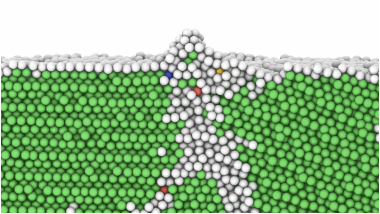
Picture 1 Examples of offered simulation solutions. From the top, acoustic simulation using the finite element method, multiscale simulation in the atomistic scale and molecular dynamics.
The experience so far in providing services to Estonian companies has demonstrated considerable interest on the part of companies in providing the corresponding services. In the expansion of the service offering, the biggest bottleneck has been the lack of information necessary for companies - they have not had the opportunity to find the provision of the corresponding service in TÜTI. The establishment of a core laboratory allows eliminating this bottleneck and making our competence and the solutions offered available to companies.
Current project partners: ABB, AS Kodumaja, Estonian Navy, Estonian Defense Forces, Saint-Gobain Glass Estonia SE, Kuma Wood OÜ, Milrem Robotics, Estelaxe, Tark Laut, Venteco Systems OÜ, Koivakonnu OÜ, Robolab OÜ, CERN, Scannersock OÜ, Ars Inc .
Check out the price list of services here!
Read more about CFD simulation software OpenFOAM here!
